
Precision Injection Molded Automotive Parts That Actually Last
Injection molded automotive components are the backbone of modern vehicle production, created by forcing molten plastic into precision-engineered steel molds under high pressure. This process forms complex, lightweight parts like dashboards and bumpers in a single, rapid cycle, ensuring unmatched strength-to-weight ratios and dimensional accuracy. By eliminating secondary assembly through integrated features such as snap-fits and bosses, manufacturers achieve drastically reduced production costs and vehicle mass without sacrificing durability.
Engineering Plastics Reshaping Vehicle Production
Engineering plastics reshaping vehicle production now allows structural parts like intake manifolds and front-end modules to be injection molded, replacing heavier metal assemblies. These materials deliver targeted strength and heat resistance directly in the molding process, eliminating secondary operations and reducing part count. For under-hood components, advanced polyamides and PPS withstand continuous high temperatures while integrating brackets and connectors into a single shot. In interior and exterior trim, injection molded automotive components gain dimensional stability and UV resistance from optimized polymer blends. The shift enables thinner walls with equivalent stiffness, lowering weight without compromising crash performance. By designing for the material’s flow characteristics, engineers consolidate functions into one mold, speeding assembly and cutting production complexity at the press itself.
High-Performance Polymers Replacing Traditional Metals
High-performance polymers are taking over jobs once held by metal in injection molded car parts, offering big weight savings without sacrificing strength. You can now swap heavy steel brackets for polyether ether ketone (PEEK) components that withstand engine bay heat and chemical exposure. These plastics also cut noise and vibration better than metal, and they resist corrosion permanently. Why choose polymer over aluminum? Complex geometries are molded in one shot, eliminating costly machining steps and reducing part count, which speeds assembly on your production line.
Lightweighting Benefits for Fuel Efficiency and EV Range
Replacing traditional metal components with injection-molded engineering plastics directly reduces vehicle mass, which lowers the energy required for propulsion. For internal combustion engines, this translates into measurable fuel savings, as less weight means the engine expends less work to accelerate and maintain speed. In electric vehicles, every kilogram shed through plastic lightweighting extends the battery’s usable range without increasing pack size. Even a modest 10% weight reduction in non-structural parts can yield a several-kilometer increase in effective EV range under real-world driving cycles. This makes plastic lightweighting for EV range extension a critical lever for overcoming consumer range anxiety and optimizing battery efficiency.
Key Material Families: Nylon, Polypropylene, and ABS
Within injection molded automotive components, three material families dominate. Nylon, polypropylene, and ABS each serve distinct mechanical roles. Nylon (polyamide) offers high tensile strength and thermal resistance, making it ideal for under-the-hood parts like air intake manifolds. Polypropylene balances low density with excellent chemical resistance, commonly used for interior trim and battery cases. ABS provides a hard, glossy surface with good impact strength, preferred for dashboard structures and panel housings. Glass-filled nylon is often specified for structural brackets requiring rigidity. Q: Which polymer offers the best balance of cost and chemical resistance for interior components? A: Polypropylene typically provides the lowest density and superior chemical resistance against oils and coolants at a lower per-part cost compared to ABS or nylon.
Critical Interior Parts Crafted Through Molding
The critical interior parts crafted through molding process in automotive injection molding relies on precise tooling to produce complex, high-tolerance components like instrument panel carriers, center console structures, and airbag chute doors. These parts demand not only dimensional accuracy but also specific material properties—such as impact resistance for knee bolsters or low-gloss finishes for trim bezels—achieved through controlled melt flow and cooling rates.
A single mold can integrate multiple functions, like snap-fits for assembly and living hinges for glove box dampers, eliminating secondary operations.
Surface textures, from soft-touch overmolding to grained patterns, are replicated directly from the mold cavity, ensuring tactile and visual consistency across thousands of production cycles. This approach turns raw polymer into a durable, safety-optimized interior backbone.
Dashboard Structures and Instrument Panel Substrates
Dashboard structures and instrument panel substrates rely on injection molding to create lightweight yet rigid frameworks that integrate mounting points for airbags, HVAC ducts, and infotainment systems. These large, thin-wall molded substrates use materials like polypropylene or ABS to balance impact resistance and dimensional stability during temperature fluctuations. The process ensures consistent wall thickness and reduces warpage through optimized gate placement, enabling direct mounting of trim components without secondary reinforcement. Tooling incorporates slides for complex geometries like defroster vents and steering column shrouds.
Dashboard structures and instrument panel substrates are injection-molded frameworks that combine structural integrity with integrated attachment features, using engineered polymers for crash safety and assembly precision.
Door Trim, Center Consoles, and Glove Boxes
Door trim, center consoles, and glove boxes rely on injection molding for precise fit and durable functionality. Door trim panels use molded substrates for lightweight structure and soft-touch surfaces. Center consoles are formed as single-piece assemblies integrating cup holders and storage bins. Glove boxes utilize molded living hinges and latching mechanisms for repeated use. A glove box door’s dimensional stability is critical to avoid sagging over time. Molded center console armrests often include foam-backed inserts for comfort.

- Door trim integrates molded speaker grilles and map pockets without secondary assembly.
- Center consoles include molded wire routing channels for electronic device charging ports.
- Glove boxes feature molded torsion springs for smooth opening and closing.
Seat Components and Safety Restraint Housings
Within injection molding, seat components and safety restraint housings demand exacting material selection and design. Seat backs and armrests are molded from impact-resistant polymers, balancing structural rigidity with occupant comfort. Safety restraint housings—such as belt retractor casings and buckle enclosures—require precise dimensional stability to ensure reliable latching mechanisms in high-stress scenarios. Thin-wall molding techniques are often employed for these enclosures to reduce weight while maintaining crash-load integrity. The table below contrasts key aspects:
| Aspect | Seat Components | Safety Restraint Housings |
|---|---|---|
| Primary stress type | Static/compliance load | Dynamic impact load |
| Polymer requirement | Flexural fatigue resistance | High tensile strength |
| Typical wall thickness | 2–4 mm | 1.5–3 mm |
Both parts leverage glass-filled nylon or polypropylene, yet the housing tolerates less creep over time to avoid latch dislodgment.
Under-the-Hood Applications Demanding Durability
Under the hood, injection molded components face brutal conditions. Heat resistance is non-negotiable, as parts near the engine must withstand continuous temperatures over 150°C without warping or melting. Chemical resistance to oils, coolants, and fuel is equally critical to prevent swelling or cracking that could lead to leaks. These parts also need high impact strength to survive vibrations and thermal cycling without fatigue failure. It’s not just about surviving a single extreme event, but maintaining performance over hundreds of thousands of miles. Practical examples include reinforced nylon intake manifolds, PPS thermostat housings, and PVDF fuel system connectors—all engineered to meet these exacting durability demands. Without this robust material selection, components would fail prematurely, risking engine damage and costly repairs.
Engine Covers, Oil Pans, and Intake Manifolds
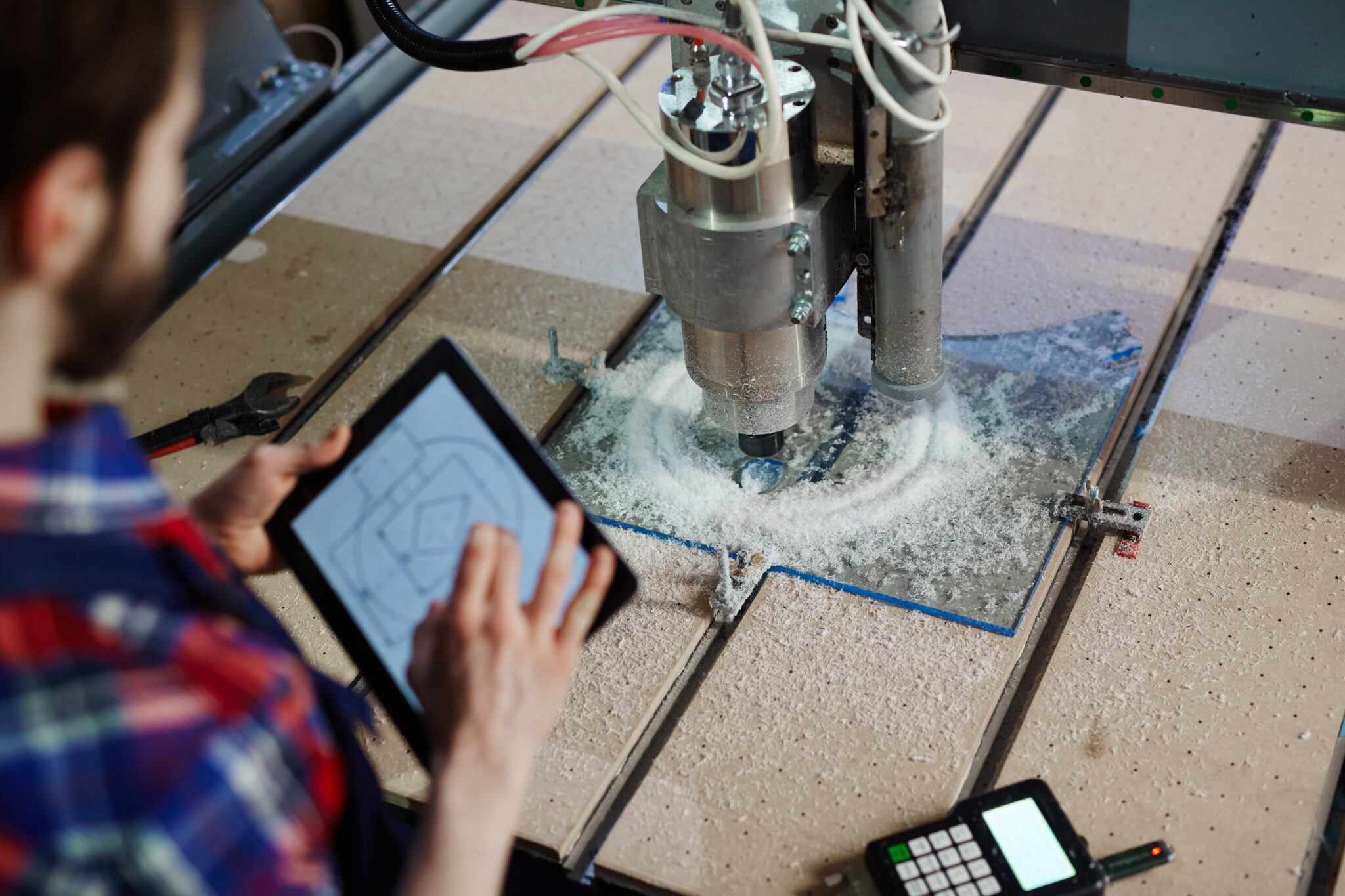
Under the hood, engine covers, oil pans, and intake manifolds demand exceptional durability from injection molded composites. These components must resist constant thermal cycling, chemical exposure to hot oils and coolants, and mechanical vibration. Engine covers encapsulate noise and protect wiring, while molded oil pans replace steel to reduce weight without sacrificing impact strength. Intake manifolds require airtight precision to maintain proper air-fuel mixtures, often using glass-filled nylon for dimensional stability. Each part is engineered to survive under-hood extremes, preventing leaks, warping, or failure over the vehicle’s lifespan.
- Advanced polymer blends withstand continuous engine bay heat without warping or cracking.
- Integrated baffles and ribs in oil pans improve oil flow and structural rigidity.
- Multi-cavity molds produce complex intake manifold runner geometries that optimize airflow.
- Fastener bosses and seal grooves are molded directly into covers and pans for leak-proof assembly.
Fluid Reservoirs, Coolant Tanks, and Air Ducts
Under the hood, fluid reservoirs, coolant tanks, and air ducts are among the most demanding injection-molded components, each facing specific stresses. Reservoirs must resist chemical attack from brake fluid or washer solvent without cracking, often using HDPE or polypropylene. Coolant tanks endure constant thermal cycling between freezing and boiling, requiring glass-filled nylon or specialty grades to prevent deformation. Air ducts require dimensional stability under heat and vibration, with talc-reinforced polypropylene providing stiffness and warp resistance. Unlike ducts, reservoirs demand weld-line strength to seal partitions; coolant tanks need thick walls to handle internal pressure. All three require precise wall thicknesses to avoid sink marks where bosses or ribs attach.
| Component | Primary Stress | Typical Material | Critical Feature |
|---|---|---|---|
| Fluid Reservoir | Chemical attack | HDPE, polypropylene | Weld-line integrity |
| Coolant Tank | Thermal cycling | Glass-filled nylon | Pressure-rated walls |
| Air Duct | Heat & vibration | Talc-reinforced PP | Warp resistance |
Battery Enclosures and Power Distribution Boxes
Beneath the hood, battery enclosures and power distribution boxes face extreme thermal and vibrational stress, demanding materials that resist corrosion and impact. Injection molding allows these components to integrate complex channels for cable routing and cooling directly into the design, eliminating secondary assembly. High-performance thermoplastics provide electrical insulation while maintaining dimensional stability under continuous engine heat. The precise sealing achieved by molding prevents moisture ingress that could short critical circuits. Engineered thermoplastic enclosures enable lighter, more durable housings compared to metal, absorbing shock without cracking. This reliability is vital as these boxes manage the flow of high-voltage energy from the battery to every electrical system in the vehicle.
Exterior Trim and Lighting Enabled by Precision Tooling
Precision tooling enables injection molded automotive exterior trim and lighting to achieve flawless, gap-free fitment and optical clarity. Complex geometries, such as light-pipe channels for LED strips or sharp body lines on chrome-accented trim, are molded directly from steel with sub-micron accuracy, eliminating post-machining. **For what application is precision tooling critical?** It is vital for sealing lens housings against moisture and achieving uniform wall thickness, preventing warpage and light leakage. Cross-functional tooling cores produce intricate undercuts for aerodynamic elements like spoilers or diffusers. This control over surface finish and dimensional repeatability ensures that trim components align flush with body panels and that lighting assemblies meet strict photometric performance requirements without secondary operations.
Grilles, Bumper Fascia, and Side Mirror Housings
Modern vehicle exteriors rely on injection molded components such as grilles, bumper fascia, and side mirror housings for both form and function. Grilles are precision-molded to allow optimal airflow while maintaining structural rigidity. Bumper fascia integrates seamlessly with impact-absorbing substrates, using advanced tooling for flush fitment. Side mirror housings are crafted with aerodynamic contours and integral mounting points. Q: Why are these parts typically injection molded rather than stamped from metal? A: Injection molding allows complex, aerodynamic shapes with integrated mounting features, lighter weight, and corrosion resistance, which is difficult to achieve with metal stamping.
Headlamp Lenses, Reflectors, and Taillight Assemblies
Precision tooling transforms polycarbonate and acrylic into crystal-clear headlamp lenses that resist yellowing and impact. Reflectors use complex faceted geometries molded directly into the surface to maximize light output without separate chrome parts. Taillight assemblies integrate these lenses, reflective housings, and LED light guides into a single, sealed unit that prevents moisture ingress. The injection process ensures exact optical alignment for focused beams and uniform indicator glow.
- Optically clear grades maintain transparency after thousands of thermal cycles
- Faceted reflector surfaces are formed in one shot, eliminating assembly errors
- Vibration welding fuses red and clear sections into a leak-proof taillight assembly
Rocker Panels, Wheel Well Liners, and Spoilers
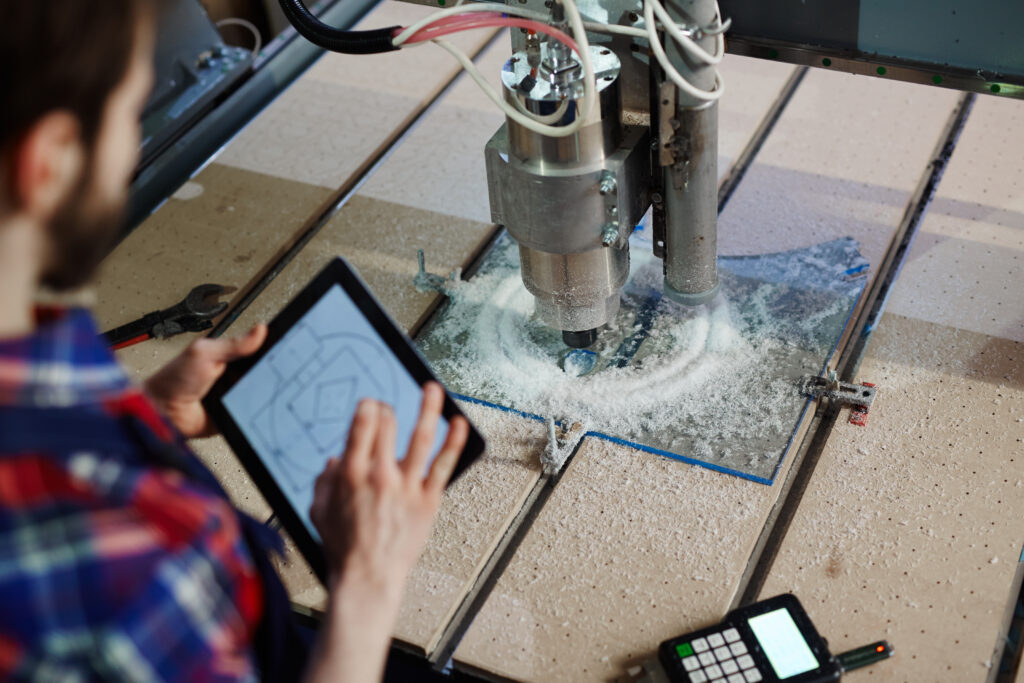
Rocker panels, wheel well liners, and spoilers are injection-molded components that leverage precision tooling for exact fit and function. Rocker panels use durable thermoplastics to resist stone chips and corrosion along the vehicle’s lower side sills. Wheel well liners, often molded from polypropylene, are precisely contoured to reduce road noise and trap debris, protecting the underbody from moisture and salt. Spoilers, typically made from ABS or PC/ABS, are engineered with tight tolerances for aerodynamic stability and seamless attachment to the rear deck or hatch. Each part’s geometry is defined by high-accuracy mold cavities, ensuring consistent performance and long-term durability.
Advanced Molding Techniques for Complex Geometries
For complex automotive geometries, advanced molding techniques like gas-assist and core-back are game-changers. They let you form hollow sections without weld lines, reducing sink marks in thick ribs or bosses. This is critical for parts like integrated air-intake manifolds, where internal passages must be smooth. Another trick is sequential valve gating, which controls melt flow to eliminate gas traps in deep, curved structures such as dashboard skeletons.
These methods allow one tool to produce a component with the stiffness of a thick wall but the weight and cycle time of a thin one.
For undercuts or snap-fits, collapsible cores or side-actions are built directly into the mold design, avoiding costly secondary operations.
Gas-Assist and Water-Assist Methods for Hollow Parts
For hollow automotive components like intake manifolds and structural pillars, gas-assist and water-assist injection molding eliminate core pull slides by injecting pressurized nitrogen or water directly into the molten polymer. This force cores out thick sections, drastically reducing part weight and sink marks while maintaining strength. Water-assist’s faster cooling speeds cycle times for long, hollow ducts, whereas gas-assist excels in smoother internal finishes for fluid channels. Both methods pivot from solid to hollow geometries without secondary drilling or assembly, enabling complex, single-piece ducts and handles that are lighter, stronger, and production-ready straight from the tool.
Overmolding and Two-Shot Processes for Multi-Material Parts
Overmolding and two-shot processes enable multi-material parts in automotive molding, eliminating secondary assembly. Overmolding bonds a soft TPE grip onto a rigid polypropylene core, common for steering wheel controls and gear shifters. The two-shot method molds a first substrate, then rotates the tool to inject a second material, creating integrated seals on connectors or dual-durometer weatherstrips. Tooling precision ensures chemical adhesion between materials, preventing delamination under vibration and temperature cycles. This approach consolidates multiple components into one robust assembly, reducing costs and weight. Key is managing material shrinkage rates to avoid warpage in complex dash panel interfaces. Multi-material automotive molding relies on these processes for durable, ergonomic interior parts.
Overmolding and two-shot processes produce multi-material automotive parts by chemically bonding substrates and overlays in a single cycle, eliminating assembly while ensuring structural integrity under dynamic loads.
Insert Molding for Threaded Fasteners and Metal Reinforcements
In insert molding for automotive components, threaded fastener encapsulation begins with pre-placed brass or steel inserts located in the mold cavity, over which molten polymer flows. This creates a permanent, stress-resistant bond around the fastener’s knurled surface. For metal reinforcements, such as stamped brackets or bushings, the process secures them precisely, eliminating secondary assembly. Thermal expansion mismatch between the metal and polymer must be accounted for in the cooling cycle to prevent residual stress cracking in the surrounding plastic. Common applications include engine mount sleeves and electronic housing inserts. A direct comparison of their core functions follows:
| Insert Type | Primary Function in Component | Typical Geometry |
|---|---|---|
| Threaded Fastener | Provides reusable, high-strength threading for module attachment and service access. | Internally threaded cylinder or hex nut with external knurling or undercuts. |
| Metal Reinforcement | Adds localized stiffness or load-bearing points within thin wall sections. | Flat plate, stamped bracket, or cylindrical bushing with perforations or holes. |
Quality Control and Testing in Component Fabrication
For injection molded automotive components, rigorous quality control and testing begins in-mold, using cavity pressure sensors to verify fill and pack phases for every cycle. Post-molding, automated vision systems inspect for flash, sink marks, and dimensional conformity to CAD tolerances, while coordinate measuring machines validate critical features like snap-fits and sealing surfaces. Material verification through melt flow index and density checks ensures batch consistency.
Effective testing eliminates variability that causes assembly failures or noise, vibration, and harshness issues in final vehicles.
Destructive peel tests on welded or chemically bonded inserts confirm adhesion strength, directly impacting component durability under thermal cycling and vibration loads specific to automotive underhood or interior applications.
Dimensional Inspection Using Coordinate Measuring Machines
Injection molded automotive components demand strict adherence to design tolerances, where CMM-based dimensional verification provides micron-level accuracy. A Coordinate Measuring Machine maps geometric features like bore diameters and mounting pads, comparing probe-captured data against a CAD model to flag deviations. For complex parts with tight fits, CMM analysis identifies non-conformities in critical areas such as sealing surfaces or clip-in points. Probe path optimization reduces cycle time without compromising data density, enabling efficient batch sampling. Resulting reports isolate specific zones requiring mold adjustment, preventing assembly line failures and scrapped batches.
Mechanical Property Validation: Impact, Tensile, and Creep Tests
Mechanical property validation for injection molded automotive components relies on three critical tests. Impact, tensile, and creep tests directly verify material resilience and long-term durability under operational stress. Impact testing confirms the component withstands sudden forces, such as a vehicle collision, without brittle fracture. Tensile testing measures yield strength and elongation, ensuring the part holds structural integrity under load. Creep testing evaluates dimensional stability over time under constant stress and elevated temperatures, which is vital for under-hood applications. These tests collectively confirm the part meets stringent automotive performance targets before production scaling.
- Conduct impact tests using charpy or izod methods to validate energy absorption surpassing 20 J for dashboard brackets.
- Verify tensile modulus exceeds 2.5 GPa for load-bearing interior clips to prevent failure during assembly.
- Perform creep tests at 80°C with 5 MPa stress to ensure less than 0.5% strain after 1,000 hours for engine covers.
Thermal Cycling and Chemical Resistance Assessments
Thermal cycling assessments expose injection molded automotive components to rapid, repeated temperature shifts, verifying dimensional stability and preventing stress cracking under hood and in cabin. Chemical resistance evaluations immerse parts in oils, coolants, and solvents to confirm material integrity and prevent swelling or degradation. These tests confirm long-term durability in harsh engine bay environments, ensuring seals, connectors, and housings survive real-world exposure without failure.
Thermal cycling and chemical resistance assessments are essential for validating that injection molded automotive plastic injection molding automotive parts components withstand extreme temperature swings and aggressive fluids, ensuring reliable performance throughout the vehicle’s service life.
Sustainability Trends Shaping Production Methods
Sustainability trends are driving a shift toward closed-loop material cycles for injection molded automotive components, where post-industrial scrap and end-of-life parts are reprocessed into new pellets. This requires rigorous sorting and compounding to maintain mechanical properties like impact resistance for interior trim or under-hood parts. Production methods now incorporate gas-assist and thin-wall molding to reduce part weight and material usage without sacrificing structural integrity. Molders are also adopting bio-based polymers, though their thermal stability demands careful process tuning to avoid degradation during high-temperature cycles. These techniques directly lower the carbon footprint per component while meeting OEM performance specs.
Recycled and Bio-Based Polymer Feedstocks
Recycled and bio-based polymer feedstocks are now viable for injection molded automotive components. Post-consumer recycled polypropylene and nylon are processed to meet strict mechanical specs for interior trim and under-hood parts, reducing reliance on virgin resin. Bio-based polymer feedstocks derived from agricultural waste or algae offer drop-in replacements for conventional plastics, maintaining impact resistance and dimensional stability in dashboards and lighting housings. These materials cut the carbon footprint of each molded part without compromising production cycle times or finished quality.
- Post-consumer recycled polymers require thorough contaminant filtering to prevent weld-line failures in complex molds.
- Bio-based polyamides achieve similar tensile strength to petroleum-based grades for high-heat engine bay components.
- Injection molding parameters must be adjusted for the lower melt-flow index of recycled feeds to avoid sink marks.
Energy-Efficient Machinery and Reduced Scrap Rates
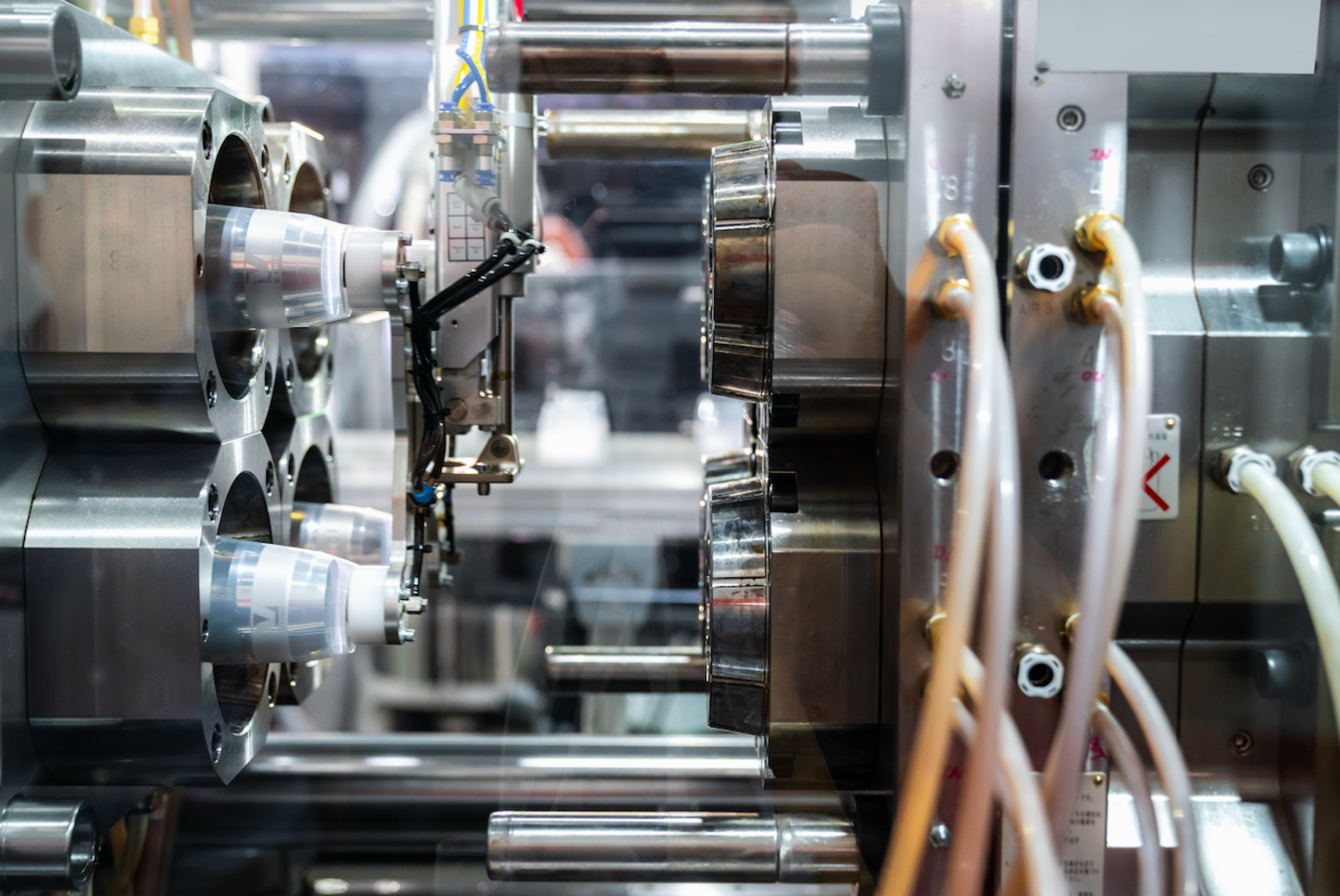
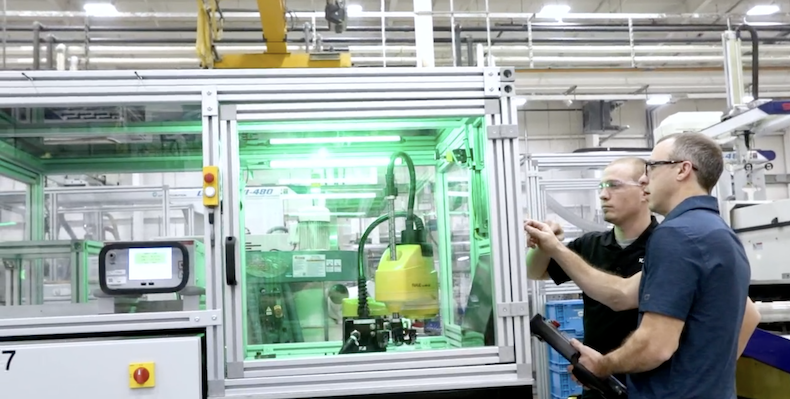
Advanced all-electric presses directly cut energy use by up to 50% compared to hydraulic systems, with servo-driven pumps delivering power only when needed. Precision process control from these machines dramatically reduces material waste by maintaining tight tolerances and consistent cavity pressures, minimizing rejected parts. Closed-loop monitoring catches deviations in real time, preventing scrap before it forms. This synergy of precision process control lowers per-component carbon footprint while boosting yield, making high-quality automotive parts both greener and more economical.
Energy-efficient machinery slashes power consumption while automated precision cuts scrap rates, creating a lean, sustainable production cycle for automotive components.
End-of-Life Recycling Pathways for Molded Parts
For injection molded automotive components, end-of-life recycling pathways focus on material recovery after part removal. Mechanical recycling grinds post-consumer parts into regrind for non-critical applications, though degradation from paint or additives limits reuse. Chemical recycling depolymerizes thermoplastic polymers back into monomers, enabling virgin-grade material for new molded parts. Feedstock separation is critical: multi-material bonded assemblies require disassembly or cryogenic embrittlement to isolate polymer fractions. Chemical depolymerization for closed-loop reuse offers the highest retention of mechanical properties for high-stress components.
- Melt filtration to remove cured adhesives and paint fragments from recyclate
- Solvent-based dissolution for polypropylene and polyamide separation
- Pyrolysis for composite-rich parts to recover carbon fiber from thermoset matrices
Cost Optimization Strategies for High-Volume Manufacturing
For high-volume injection molded automotive components, optimizing cycle time is paramount, achieved through advanced hot runner systems and conformal cooling channels that drastically reduce part solidification. Employing multi-cavity molds with balanced fill maximizes output per press hour. Strategic use of glass-filled or impact-modified polypropylene in non-structural parts lowers material costs without sacrificing durability. Adopting family mold designs for related brackets or clips eliminates secondary assembly steps. Automated robotic part removal and inline degating further cut labor overhead, while predictive maintenance on mold vents and tie bars prevents costly unplanned downtime in continuous production runs.
Mold Design for Shorter Cycle Times
Optimizing conformal cooling channels is the primary lever for mold design targeting shorter cycle times in automotive components. By positioning these channels to follow the part’s complex geometry, heat extraction becomes uniform and rapid, directly reducing the cooling phase. A multi-cavity layout must balance runner balance with thermal symmetry, as uneven melt flow extends hold times. Tapered cores should be specified explicitly on deep draw features to avoid warpage that would necessitate slower cooling rates. Similarly, a hardened steel cavity with a polished surface finish accelerates ejection by minimizing friction, preventing dwell delays. Each geometry decision—from gate location to vent depth—is a calculated trade-off to shave seconds off the cycle without compromising dimensional stability.
| Design Feature | Cycle Time Impact |
|---|---|
| Conformal cooling channels | Reduces cooling phase up to 30% |
| Polished cavity surface | Enables faster ejection, eliminates hold delay |
| Symmetrical runner layout | Ensures balanced fill, shortens hold time |
Material Selection Balancing Performance and Expense
In injection molded automotive components, cost-effective material selection demands balancing mechanical properties like tensile strength and impact resistance against per-unit resin expense. Engineers often substitute high-cost engineering thermoplastics with filled polypropylene or talc-reinforced grades for non-structural interior parts, reducing material spend without compromising crash safety or thermal stability. For under-hood applications, short-glass-filled nylons replace more expensive long-fiber variants where creep resistance requirements are moderate. This precise pairing of performance thresholds—such as using unfilled acetal for snap-fits versus glass-filled for gears—optimizes mold cycle times and avoids over-engineering, directly lowering piece price while meeting OEM durability targets.
Automation and Robotics in Post-Molding Operations
In automated post-molding finishing for automotive components, robotic cells execute trimming, degating, and deflashing with precision unattainable by manual labor, directly reducing scrap rates. Vision-guided robots inspect parts for flash or sink marks, enabling immediate corrective feedback to the molding press. Integrated pick-and-place units transfer fragile components like connectors to downstream assembly, eliminating damage from manual handling. For multi-cavity molds, robotic segregation by cavity streamlines quality tracking without human intervention.
- Robotic deflashing removes gates and flash without abrasive media, preserving surface finish for painted trim parts.
- Automated ultrasonic welding stations use servo-driven end-of-arm tooling to join mating closures with consistent cycle times.
- Collaborative robots (cobots) perform part labeling and insertion of threaded inserts, freeing personnel for higher-value process optimization.