
The Best Cardboard Box Handles for Easy Carrying
Struggling to lift an awkward, heavy box can strain your fingers and ruin your grip, but a cardboard box handle solves this with a simple, built-in solution. It works by creating a cut-out or attaching a plastic or fabric loop that shifts the weight from your fingertips to your stronger palm and arm. This design allows you to carry more with less effort, reducing fatigue and the risk of accidental drops.
Why Your Package Needs a Better Grip
A poor grip on your box directly endangers its contents and frustrates the recipient. When a handle is weak or flush-cut, fingers struggle to find purchase, leading to dropped packages and broken goods. A better cardboard box handle integrates die-cut punch-outs that allow for a secure, four-finger insertion. This improves the balance of the load, preventing the box from tilting and spilling heavy items. By ensuring the handle distributes weight across the hand and not just the fragile panel, you significantly reduce crushing and tearing failure. Why your package needs a better grip is simple: it transforms a liability into a reliable, ergonomic carrying tool that protects both the user’s comfort and the product’s integrity during transit.
How die-cut cutouts transformed heavy lifting
Die-cut cutouts transformed heavy lifting by integrating a handle directly into the cardboard panel, eliminating the need for separate, taped-on grips. This single-piece construction creates a structural handhold that distributes weight across the box’s sidewall, rather than concentrating stress on a weak adhesive joint. Early box handles tore under load; the die-cut method uses the material’s own bending and folding to form a reinforced channel, allowing the user to lift with their hand cradled inside the box’s center of gravity. This shift reduced the physical leverage required to hoist dense contents, as the cutout transfers force evenly through the corrugation’s flutes, preventing the box from collapsing during a heavy lift.
The hidden cost of a missing carry solution
Omitting a carry solution from a cardboard box forces users into awkward, unbalanced grips that strain wrists and fingers, leading carton box plastic handle to dropped packages and damaged goods. This creates a direct financial hit from returned merchandise and wasted inventory. The hidden cost of a missing carry solution also emerges in lost customer loyalty, as a single difficult lift can deter repeat business. Every moment a recipient struggles to reposition their hold is a moment they question your attention to basic usability. Friction from improper handling further weakens the box structure, turning a secure shipment into a liability through preventable breakage.
Anatomy of an Effective Carry Feature
The anatomy of an effective carry feature in a cardboard box handle centers on load distribution and ergonomic geometry. A properly designed die-cut handle must distribute the box’s weight across the hand’s palm, not just the fingers, to prevent discomfort or failure. Specifically, the cutout’s curvature should match the natural grip of a hand, with adequate foam or reinforced padding to mitigate pressure points against the cardboard’s raw edge. The handle’s structural integrity relies on a reinforced flap or rolled edge that prevents tearing under strain. Additionally, the vertical placement of the cutout must maintain the box’s center of gravity, ensuring a stable carry without tilting. Ultimately, a successful feature integrates material thickness with precise cutout dimensions to offer a secure, balanced lifting point that minimizes user fatigue.

Material thickness and tear resistance
The handle’s tear resistance is directly proportional to the **material thickness** of the surrounding cardboard. A thin, single-wall substrate (under 1.5 mm) will shear at the die-cut edges under modest weight, whereas a robust double-wall or triple-wall board (2.5 mm or thicker) distributes tensile stress across multiple fluted layers, preventing catastrophic ripping. The handle’s aperture must also be paired with a sufficiently thick margin—typically 15 mm or more—to resist notch propagation during repeated lifting. Thicker board raises the force threshold for initiation of a tear by at least 40%, as the additional material resists the point-load concentration at the handle’s corners.
In summary, handle tear resistance is governed by board thickness: thicker, multi-ply cardboard elevates the load threshold before tearing initiates at the die-cut edges.
Ergonomic curve angles for comfortable transport
For a cardboard box handle, ergonomic curve angles directly reduce palm strain during transport. A forward curve of 10–15 degrees in the handle’s cutout aligns the wrist’s neutral position, transferring load to the forearm muscles rather than the finger joints. The contact arc must follow the natural curl of the fingers under grip, typically requiring a radius of 30–40mm to avoid pressure points. A backward bend at the handle’s entry point prevents the cardboard edge from digging into the web of the thumb, allowing a full hand wrap without friction. These subtle angular adjustments ensure comfortable transport over longer distances without shifting the user’s grip.
Placement height relative to center of gravity
The handle’s placement height relative to the box’s center of gravity dictates stability during transit. Positioning the handle slot at or just above the neutral balance point prevents the box from tilting forward or backward when lifted. A handle cut too high forces the load to pivot downward, straining the wrist; too low, and the bottom edge drags. For uniform contents, align the handle’s centerline with the box’s vertical midpoint. For top-heavy loads, shift the handle incrementally upward to counterbalance the mass. Q: What happens if the handle is set below the center of gravity? A: The box’s bottom swings toward the carrier, increasing the risk of the load spilling forward.
Plastic vs. Paper: Choosing the Right Carry Method
When adding a handle to a cardboard box, the carry method hinges on weight and distance. A plastic handle (typically riveted or glued) excels for heavy loads over long hauls, as it won’t tear wet paper or snap under strain—ask yourself: “Will this box exceed 10 lbs or face moisture?” If yes, go plastic. Conversely, a paper handle (often a reinforced die-cut slot) is ideal for lightweight items carried briefly, like a bakery box. Its biodegradable nature suits single trips. For mid-weight boxes (5–10 lbs), a paper handle paired with a glued cardboard reinforcement strips offers surprising durability, but never trust it for a quick dash in the rain. Match the handle material to the trip, not the trend.
Injected molded inserts for heavy loads
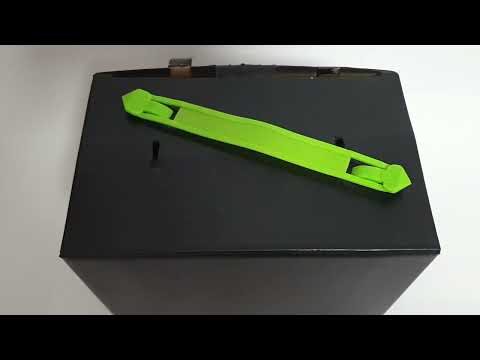
For truly heavy loads, injected molded inserts transform a standard cardboard box handle into a reliable lifting point. These hard plastic brackets reinforce the cutout, distributing weight evenly to prevent tearing. To install, simply align the molded insert with the pre-cut handle hole, then press it into place until it snaps or locks. This creates a rigid, ergonomic grip that handles substantial weight without bending or breaking, making them ideal for tools, books, or bulk items.
Reinforced tuck-in flaps for sustainable packaging
The reinforced tuck-in flap design directly addresses the load-bearing limit of paper-based handles. By integrating a double-layer cardboard fold at the box’s top closure, stress from the carry slot is distributed across the full panel width, preventing tear-out at the handle cutout. This structure allows a single-piece cardboard box to function without plastic reinforcement, relying on the interlocked flaps to stabilize the handhole’s edge. For heavy items, a glued tuck-in flap produces a rigid beam effect, while a friction-fit flap suits lighter loads. Both variants eliminate the need for separate handle attachments, keeping the package monomaterial and easier to recycle.
Adhesive strap handles for odd-shaped containers
For oddly shaped containers that lack flat, uniform surfaces, adhesive strap handles provide a versatile carry solution where traditional cardboard box handles fail. These handles feature a pressure-sensitive adhesive backing that bonds securely to curved, tapered, or irregular sides, such as those on paint buckets, propane tanks, or awkward machinery parts. Unlike cut-out handles, they distribute load stress across the bonded area, reducing the risk of tearing. When selecting, ensure the adhesive is rated for the container’s material (e.g., polyethylene or metal) and surface texture. Surface preparation—cleaning and drying the application site—is critical for maximum grip strength.
Design Mistakes That Ruin the Experience
The biggest design mistakes that ruin the experience with a cardboard box handle start with poor placement. If the cutout is too close to the edge, the flap rips instantly under weight, dumping your items. Another killer is making the handle too narrow—it digs into your fingers like a wire, turning a two-minute carry into agony. Sharp, unfinished edges are equally brutal, slicing into palms. The worst offense is cutting handles into weak, single-ply cardboard; the entire structure buckles, forcing you to awkwardly clutch the box from underneath. A functional handle should support the load, not fight you.
Sharp edges that dig into fingers
A cardboard box handle with sharp edges that dig into fingers transforms a simple carry into a painful ordeal. When die-cut finger holes lack smooth beveling or are left with raw paperboard, each step cinches the skin, causing strain and red marks. This finger pinch flaw escalates quickly: first comes discomfort from the abrasive lip, then deeper pressure as weight settles, and finally a forced grip shift or drop. For heavy loads, the edge acts like a dull blade. The sequence is predictable: initial contact stings, sustained pressure creates a burning sensation, and prolonged use leaves small cuts. No adhesive or padding can fix this—only rounded, reinforced cutouts prevent misery.
- Rough edges abrade skin on first contact
- Weight deepens the pressure into burning pain
- Persistent handling causes micro-cuts and blisters
Shallow cutouts that fail to fit gloved hands
Shallow cutouts that fail to fit gloved hands create a fundamental ergonomic failure in cardboard box handles. When the cutout depth is less than the thickness of a gloved finger, the user cannot achieve a secure grip, converting the intended hold into a precarious pinch. This design oversight effectively forces glove removal, negating any protective purpose for cold or hazardous environments. The shallow geometry also concentrates force on a small skin area, accelerating fatigue and discomfort. Improper cutout depth for gloved hands thus transforms a labor-saving feature into a friction point that slows workflow.
- Insufficient clearance forces the gloved hand to curl unnaturally, reducing lifting stability.
- Shallow edges create a sharp pressure point across the knuckle, not the palm.
- Moisture or debris on gloves further reduces the minimal friction available from a shallow grip.
Weak perforations that tear mid-lift
A common frustration with cardboard box handles is weak perforations that tear mid-lift. When the die-cut lines are too shallow or the cardboard grain runs the wrong way, the handle flaps rip out right when you need them most—spilling contents everywhere. To avoid this:
- Check that perforations are deep enough to cut through at least 70% of the board thickness.
- Ensure the handle’s curved ends are reinforced with extra scoring to prevent stress fractures.
- Test the handle by lifting a loaded box a few inches before scaling up production.
Customization for E-Commerce and Retail
In e-commerce, customizing a cardboard box handle transforms a mundane shipping container into a branded unboxing experience. Retailers can print logos, care instructions, or QR codes directly onto the handle cutout, turning it into a touchpoint that customers engage with first. Custom die-cut handles also allow for precise sizing, ensuring heavy purchases like books or small appliances are easy to carry without tearing. Premium retailers often laminate or reinforce the handle area with a contrasting color or texture to signal product quality. A well-placed handle design can subtly guide the customer’s grip, reducing damage to the box’s contents during transit. This tactile personalization directly supports brand recall and repeat purchases.
Branding opportunities on integrated grip panels
Integrated grip panels on cardboard box handles serve as direct branding real estate during product transit. Retailers can print their logo, tagline, or a QR code directly onto the contoured cutout area without compromising handle function. This space is ideal for micro-messaging, such as a website URL or a sustainability claim, because the panel remains visible when the box is carried. Unlike external box faces, the grip panel’s tactile contact increases the chance a user reads the imprint. A matte lamination or spot UV coating on this specific panel further enhances logo legibility and premium feel.
Color-coded strength ratings for warehouse staff
A color-coded strength rating system for warehouse staff directly integrates with cardboard box handle customization by assigning specific hues to handle load capacities. Each color, such as blue for light items or red for heavy loads, allows pickers to instantly identify box hand strength without checking labels. This visual cue minimizes ergonomic risk by guiding staff to match their lifting technique to the handle’s rated integrity. The system effectively reduces mishandling damage and speeds up sorting when handles are color-matched to warehouse task prioritization workflows. Implementing this requires calibrating handle colorants to exact poundage thresholds during production.
Tamper-evident seals that double as carry points
Tamper-evident seals that double as carry points integrate a reinforced die-cut flap into the box’s closure, allowing the sealer to be lifted as a handhold without breaking the seal. The cardboard handle is formed by a perforated tab that remains attached to the lid; when the seal is intact, the tab lies flat, securing the contents. For carrying, the user pushes the tab upward, creating a loop that engages with a matching slot on the opposite side. This dual-function design ensures visual proof of first opening—the tab cannot be reinserted cleanly after use—while eliminating separate handle components. The sealing adhesive is selected for high shear strength but low peel strength, so the handle does not detach under load.
- Integrated perforated tab creates a carry loop only after seal is broken
- Adhesive formulation prevents handle failure while allowing clean seal removal
- Slot-and-tab mechanism locks the handle into position for weight distribution

Industry-Specific Needs for Secure Lifting
In warehousing and logistics, the cardboard box handle must resist tearing under high-speed sortation, where automated systems lift boxes by the cutout. For e-commerce fulfillment, a handle fails if it can’t support a mix of heavy books and fragile ceramics without the box bottom collapsing. A common user question: *How does a cardboard box handle ensure secure lifting in cold storage?* It relies on a reinforced die-cut pattern that prevents moisture-weakened fibers from ripping, as frozen goods increase brittleness. The handle’s grip width must also accommodate gloved hands in chilled environments, avoiding slippage that drops payloads during pallet transfer.

Groceries: moisture-resistant and reinforced stress points
For grocery boxes, handles must integrate moisture-resistant materials to prevent failure from condensation, spilled produce, or refrigerated storage. Reinforced stress points—typically at the handle cutout’s corners—are critical because wet cardboard loses up to 70% of its tensile strength, shifting load burden entirely to the handle. A plastic or wax-coated insert bonded at these stress points distributes weight, stopping tears where fibers are weakest. Even sweaty milk jugs and frozen bag leaks won’t compromise a handle if these two features work in tandem.
Groceries demand handles that resist moisture degradation and reinforce cutout stress points to survive damp, heavy loads without tearing.
Furniture: padded loops for knuckle protection
In furniture handling, padded loops for knuckle protection address the specific risk of impact during box maneuvering. These integrated fabric or foam loops, sewn into reinforced handles, absorb shock when a loaded corrugated box contacts adjacent furniture edges or walls. Unlike standard die-cut handholds, the padding distributes pressure across the dorsal side of the fingers, preventing bone bruising from sudden stops. This design is engineered for scenarios where the box acts as a carrying sled, requiring the handler to curl fingers around a raised loop. The gap created by the padding ensures knuckles do not scrape against the cardboard flap.
- High-density closed-cell foam padding prevents compression after repeated contact with hardwood or metal fixtures.
- Loop must be large enough to accommodate work gloves without pinching the knuckle ridge.
- Reinforced stitching at the loop base is critical to avoid tear-out when shifting heavy furniture boxes sideways.
- Non-slip fabric on the loop underside reduces hand shift during rotational lifts, minimizing knuckle impact against the box wall.
Electronics: anti-static materials and shock absorption
When lifting electronics, a standard cardboard box handle can generate static or fail to protect sensitive components. For this industry, handles built with anti-static and shock-absorbing materials are essential. Integrating conductive plastics or carbon-filled polymers into the handle prevents electrostatic discharge (ESD) that could fry circuit boards. Additionally, foamed rubber or silicone grips absorb sudden jolts during lifting, keeping fragile items like hard drives safe. Why isn’t a regular plastic handle safe for electronics? Ordinary handles can build up static charge and transfer it directly to the device, while lacking the cushioning to dampen impacts that crack solder joints.
Testing Protocols for Durability and Safety
The handle’s endurance is first tested by suspending a fully loaded box for one hour, simulating a long carry from a warehouse to a delivery truck. A repeated drop test from waist height onto a concrete floor checks for handle tearing, while a controlled swing test replicates the natural momentum of walking. During the humidity chamber trial, the handle must hold firm even as the cardboard softens. A handle that survives a sudden, jolting catch after a pallet slip proves its real-world value more than any lab spec. The final protocol involves a twenty-four-hour static load with a slight lateral force, mimicking the box resting awkwardly against a car seat.
Weight drop tests from standard shelf heights
A cardboard box handle’s reliability is often proven through weight drop tests from standard shelf heights. Technicians load the box to its rated capacity, then release it from a shelf at 24 inches. The impact forces the handle to absorb shock without tearing the board or snapping. Each drop checks whether the handle voids the adhesive or cracks the die-cut. Passing multiple drops—say, three to five from different angles—confirms the handle won’t fail when a shopper grabs it off a warehouse shelf.
Weight drop tests from standard shelf heights simulate real-world snatches, ensuring the handle survives sudden loading without tearing.
Repetitive lift cycles to simulate retail handling

Repetitive lift cycles to simulate retail handling subject the cardboard box handle to a programmed sequence of picks, carries, and set-downs using a pneumatic actuator. Each cycle applies a force equivalent to a standard 15-pound retail load, with the handle rotating 90 degrees between lifts to mimic stocking, checkout, and bagging orientations. After 500 cycles, inspectors check for handle tear-out at the die-cut slot and delamination of the corrugated flute structure. A passing result requires zero structural failure and less than 2 mm of slot elongation. Q: How many lift cycles represent a typical retail shelf-life? A: Five hundred cycles are the baseline, simulating approximately one year of weekly store handling.
Environmental chamber tests for humidity and extreme cold
Environmental chamber tests for cardboard box handles force components into humidity and extreme cold to expose latent failures. A handle saturated at 95% relative humidity and 40°C must retain tensile grip without adhesive delamination. In extreme cold at -30°C, the handle’s polymer becomes brittle; a sudden drop test here reveals cracking along stress lines before field use. These cycles mirror actual supply chain risks—a handle can snap when a freezer truck’s door swings open. For robustness, extreme cold impact resistance is validated through repeated freeze-thaw transitions, ensuring the handle doesn’t shatter on a frozen loading dock.
Humidity weakens bonds; extreme cold embrittles plastic—environmental chambers confirm a handle’s durability across warehouse humidity and subzero transit, not just room-temperature ideals.
Future Trends in Carry Technology
The future of carry technology for cardboard boxes points decisively toward ergonomic, integrated handles. Biosculpted die-cut handles that align with the hand’s natural grip surface will become standard, reducing pressure points during heavy loads. We are moving beyond simple slits to reinforced, tear-resistant apertures using composite fiber layering within the cardboard itself.
Expect to see “smart-grip” textures printed directly into the handle surface, providing friction without adding plastic.
Further innovation lies in retractable pull-handles that slide from the box side, converting a standard carton into a briefcase-like carry device. This eliminates the need for separate straps or tools, making the box itself the sole, optimized carry solution.
Biodegradable bioplastic handles for zero-waste shipping
A key future trend is integrating biodegradable bioplastic handles for zero-waste shipping directly into cardboard boxes. These handles, often made from polylactic acid (PLA) sourced from corn starch, break down in industrial composting facilities, leaving no toxic residue. Unlike plastic tape, the handle is part of the box structure, eliminating separate disposal. Users simply tear off the bioplastic handle after unboxing and compost the entire package together.
Do biodegradable bioplastic handles feel as strong as regular plastic handles for heavy boxes? Yes, modern bioplastics offer tensile strength comparable to petroleum-based plastics, though they are less heat-resistant. For standard shipping weights under 50 pounds, these handles are fully reliable for lifting and carrying.
Smart grips with RFID tags for inventory tracking
Future carry technology integrates RFID-enabled smart grips for inventory tracking directly into the cardboard box handle. Each grip houses a passive RFID tag that wirelessly transmits a unique ID when scanned by a handheld reader or portal. As workers lift boxes, the grip’s embedded chip instantly logs the item’s location and movement without manual scanning. This eliminates separate label placement and speeds warehouse audits. Q: How does the smart grip update inventory in real time? A: As the box passes through a door or past a scanner, the grip’s RFID tag automatically sends data to the inventory system, reducing human error and enabling live stock visibility during every lift or transit.
Magnetic closures that snap shut for automated packing
Magnetic closures that snap shut for automated packing are set to change how you handle cardboard boxes. Instead of fumbling with tape, these embedded magnets instantly align and lock the flaps when the box passes through a packing line, securing the load in a split second. This creates a built-in, self-sealing design that works perfectly with integrated handles, as the strong magnetic bond keeps the closure flush even when you’re carrying a heavy box by its cut-out handle. No more broken seals or flimsy flaps.
- The instant snap-shut lock eliminates tape waste, making packing faster and more reliable for e-commerce.
- Magnets are embedded inside the box flap and body, hidden from view and safe for electronics inside.
- You can open and reseal the box multiple times without losing magnetic strength, perfect for returns or storage.